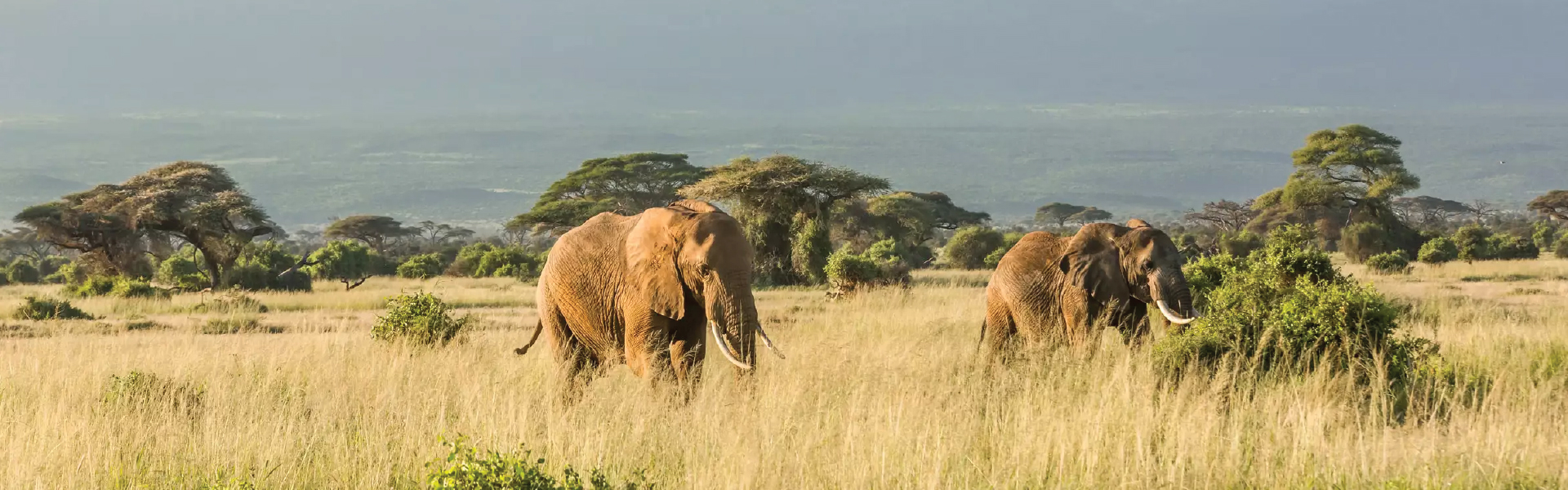
Kilimanjaro rises out of the Serengeti. is located on the Northern border of Tanzania, Kilimanjaro, or Kilima Njaro as the Swahili locals like to call it, rises an impressive 19,335ft above sea level. Formed over 500 000 years ago, this stratovolcano consists of three volcanic cones, namely Kibo, Shira and Mawenzi.
Vegetation on the mountain varies from tropical rainforests to alpine desert, depending on the altitude. Temperatures on the mountain are extreme.
In addition to being the highest mountain on the African continent, Kilimanjaro is also the tallest mountain on earth that can be conquered by individuals without any specialist mountaineering skills.
Getting to Kilimanjaro
One will fly directly into Jomo Kenyatta International Airport in Nairobi, after which they will usually spend an evening in a hotel or guesthouse in the town. One of the ways of getting to the border is via the Davanu Shuttle which runs all the way into the towns of Arusha and Moshi on the Tanzanian side of the border. The journey to the border takes approximately 5 hours, after which it is another hour or two before one reaches
Arusha.
For those climbers who have elected to make their summit attempt via the Marangu Route, it is possible to travel even further east to the town of Marangu.
Another means of getting to Kilimanjaro which is fast growing in popularity is via Kilimanjaro Airport (KAI) which is situated between the towns of Arusha and Moshi. A flight to Kilimanjaro is relatively easy to come by. Due to the fact that body of Mount Kilimanjaro is split by the border between Tanzania and Kenya, it is possible to access the mountain from either of these two countries.
Activities in Kilimanjaro
There are a number of routes up the Shining Mountain. On the Marangu Route you will enjoy the comfort of bunk bedded huts and solar power, whilst on the Machame route only tented accommodation is available. Although more rustic, this route is less direct than Marangu and allows you to take in more of the spectacular mountain scenery. In addition there are also a number of less travelled routes including the Rongai, Western Breach and Lemosho
The triple peaks of Kilimanjaro burn like coals in the fading light of the African sun.
Weather
The weather is unpredictable. Precipitation varies from 2000mm per year in the rainforest belt to less than100mm per year in the summit zone. Similarly, daily temperature fluxes.
The only real recommendation to climbers is that they avoid the rainy season, when visibility is bad and the mountain becomes slippery and treacherous. Long rains occur from February to May while shorter rains occur during November and December.
The lower plains are hot and dry with average temperatures of around 85 degrees Fahrenheit.
Higher up the mountain, temperature are drastic and the variation between daytime and night time temperature becomes more and more apparent.
By the time one reaches the summit area of Kilimanjaro the air is icy and dry and temperatures are well below zero.
Accommodation at Kilimanjaro
The most successful chain of huts are owned by the Naro Moru River Lodge and due to its popularity with both local and international climbers it is advisable to book well in advance. The Mountain Club of Kenya and Bantu Lodge do also own a couple of huts on the mountain.
Met Station Lodge. It is located on the Naro Moru Route and is at an altitude of 3048m. The lodge is managed by the Naro Moru River Lodge and sleeps around thirty people. There are a couple of latrines and water is available from the various taps located besides each Banda. There are about five bandas and a store.
Mackinders Camp. It is also managed by the Naro Moru River Lodge and is at an altitude of. It sleeps about forty people and water is available and so are latrine facilities. It from here that all summit attacks are launched. The approximate elevation is about 4200m.